
Retaining wall pricing is calculated by the wall's face area, its height multiplied by its length, not by linear feet alone. That is because a taller wall needs exponentially more reinforcement, footing depth, and engineering than a shorter wall of the same length, so doubling the height more than doubles the cost.
The material is the largest cost driver after size. In the Atlanta market, treated timber and concrete block sit at the low end, poured concrete in the middle, and natural stone at the top, a spread wide enough that the same wall can cost two or three times as much depending only on the material chosen.
The gravel backfill, perforated pipe, and weep paths that keep a wall from failing commonly add several hundred to a couple thousand dollars to a project on their own. On Georgia clay, skipping that drainage to lower a quote is what causes walls to lean and need rebuilding, making the cheaper wall the more expensive one over time.
The first thing a homeowner researching a retaining wall in Cobb County learns is that nobody will quote a clean number over the phone, and that is not a dodge. The cost of an engineered retaining wall is set by the wall itself, its height, its length, the material, and the soil and slope it has to hold, and those vary so much from one Marietta or Smyrna lot to the next that a single per-foot figure would be misleading. A three-foot garden terrace and a six-foot wall holding a driveway back from a hillside are different structures with different engineering, and they are priced that way. Understanding what actually drives the number is how a Cobb County homeowner reads a quote and knows whether it is fair, and whether the wall behind the number will actually last. Heide Contracting prices each wall from an on-site evaluation rather than a calculator, because the lot determines the cost.
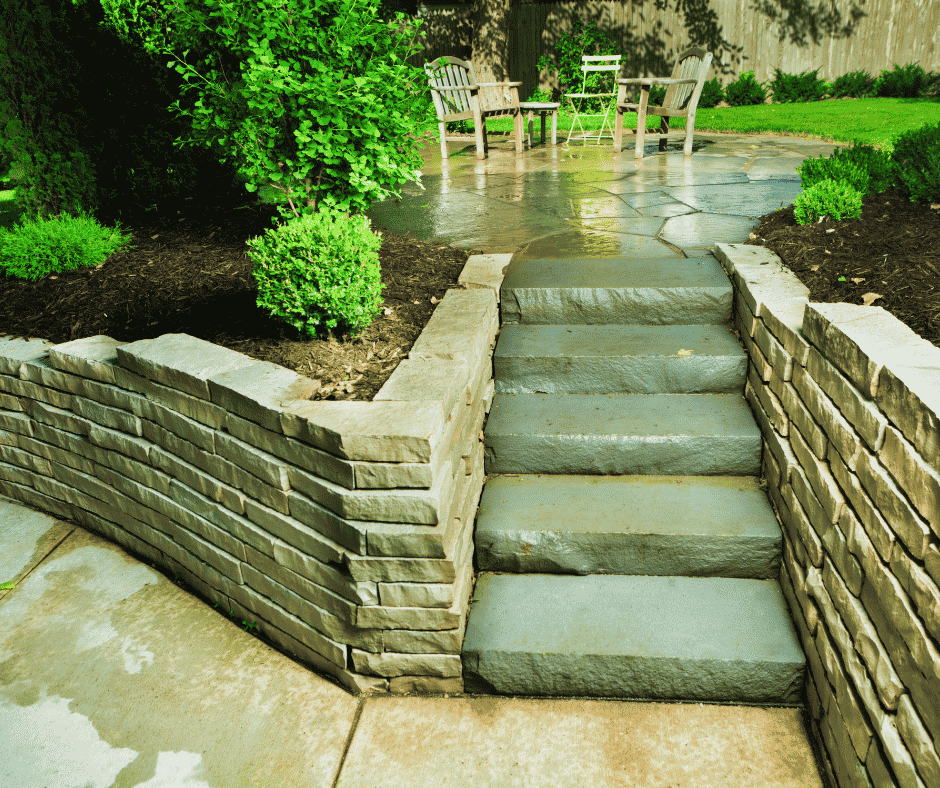
Most contractors price a retaining wall by the square foot of wall face, which is the height multiplied by the length, because that captures something a simple linear measurement misses. A taller wall does not cost proportionally more, it costs disproportionately more, since height drives the engineering, the reinforcement, the footing depth, and the lateral load the wall has to resist. A wall that doubles in height more than doubles in cost. Across the Atlanta market, including Cobb County communities like Marietta, Smyrna, and Vinings, installed retaining wall costs commonly run somewhere in the range of roughly twenty to one hundred dollars per square foot of wall face depending on material and conditions, which is a wide band precisely because the variables below move it so much.
That range is a starting point for understanding, not a quote. The same wall built in poured concrete versus natural stone, on a flat accessible lot versus a steep one with no equipment access, with simple drainage versus a complex system, can land at opposite ends of that band. This is why a retaining wall in Atlanta and the surrounding metro is quoted after a site visit, not before. The honest version of cost information is the list of drivers, so a homeowner can see which ones apply to their lot and roughly where their project will fall.
The single largest driver after size is material. Concrete block, the segmental units that interlock, sits at the lower end of the Atlanta range, commonly around twenty to forty dollars per square foot installed. Poured concrete runs higher, often in the thirty to sixty dollar range, with the strength and durability that taller structural walls need. Natural stone is the premium choice and can reach fifty to one hundred dollars per square foot, while treated timber is the cheapest up front at roughly fifteen to thirty dollars but carries a short lifespan before rot sets in, which is why most Georgia jurisdictions no longer allow it for engineered walls. The material decision sets the baseline the other factors then adjust.
The remaining drivers each move the number meaningfully. Consider them in order:
Those five, layered on top of the material baseline, are why two retaining walls of the same height and length on two different Cobb County lots can be quoted thousands of dollars apart. None of them is padding. Each reflects real material, labor, or engineering the wall requires to hold.
Georgia Piedmont clay is a genuine cost factor, not a regional footnote. The clay swells when it takes on water and shrinks when it dries, and that repeated movement puts a constantly shifting load against any retaining wall holding it. A wall built for that behavior needs more reinforcement, a properly sized footing, and a real drainage system to relieve the water pressure that builds behind it, and all three add cost. A contractor who quotes low by skipping the drainage or undersizing the footing is not saving the homeowner money, they are deferring a failure that becomes a far larger bill when the wall leans and has to be rebuilt. On Cobb County's hillside lots, where grade change and heavy rain compound the clay's movement, that engineering is what the price is buying.
This is the part of a retaining wall quote that separates a structural contractor from a crew stacking block to a number. The cheap quote and the sound quote often look similar on paper until a homeowner sees what each includes below the surface. A retaining wall in Atlanta and Cobb County is only as good as the footing and drainage behind it, and those are exactly the line items a too-low bid tends to leave out.
Height is also where regulatory cost enters the picture. A retaining wall over four feet, measured from the bottom of the footing to the top of the wall, generally requires a building permit and an engineered design across Cobb County and metro Atlanta, a threshold adopted from the International Residential Code. A shorter wall crosses the same line if it carries a surcharge, meaning an added load such as a driveway, a patio, or a home foundation above or behind it. Once a wall passes that threshold, the design must be engineered, the permit must be pulled, and the project carries staged inspections of the footing and reinforcement, each of which is a real cost the homeowner should expect rather than be surprised by.
These are not optional line items a homeowner can trim to save money, they are the cost of a wall that is legal and that will not fail. A wall built without the required permit can be ordered torn out, and it surfaces as an unpermitted structure during a home sale. Heide Contracting builds the permit, the engineered design, and the inspections into the project from the start, because on a wall over four feet they are part of the structure's cost, not an add-on. A quote that omits them is not cheaper, it is incomplete, and the gap usually surfaces later as a change order or a failed inspection.
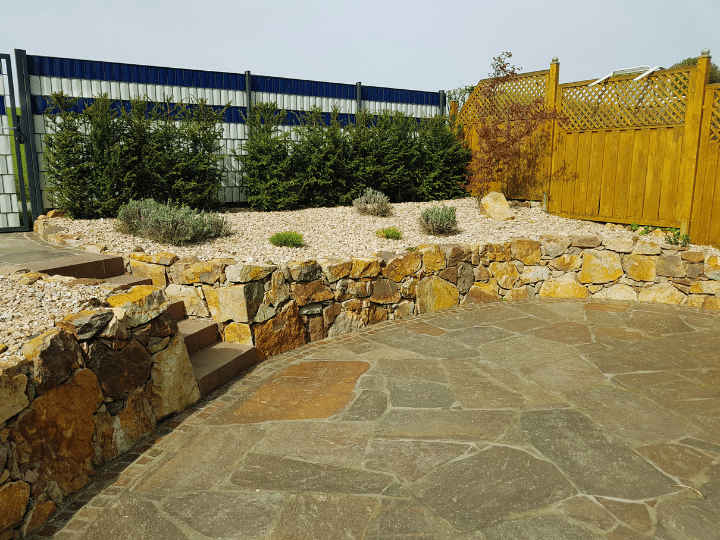
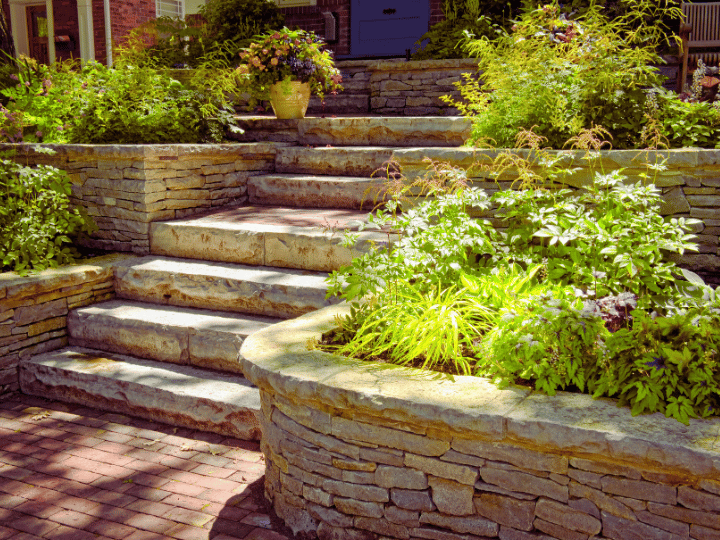
The cheapest quote is rarely the cheapest wall. When two bids on the same Cobb County project come in far apart, the gap usually lives in the parts a homeowner cannot see: the depth of the footing, the amount of reinforcement, and whether real drainage is included. A crew that prices a wall as a stack of block on shallow ground can quote a number that looks attractive, but a wall built that way on Georgia clay tends to lean within a few wet and dry seasons, and the rebuild costs more than the sound wall would have in the first place. The price of a retaining wall is not only what shows on the invoice, it is the cost spread across the years the wall is supposed to last.
This is why comparing retaining wall quotes by the bottom-line number alone misleads homeowners. A useful comparison looks at what each quote includes: the footing specification, the drainage system, whether the design is engineered and permitted, and what the contractor stands behind afterward. A higher quote that includes a proper footing, a real drainage system, and an engineered design for the slope is often the lower cost over the life of the wall, because it does not have to be paid twice. On a Cobb County hillside lot where the clay and the grade are working against the wall every season, that durability is the part of the price that actually matters.
Heide Contracting works across Cobb County and the broader metro, from Marietta, Smyrna, and Vinings to the intown Atlanta neighborhoods of Buckhead, Midtown, Morningside, and Druid Hills, and the surrounding Fulton and DeKalb County communities. That footprint matters for pricing a retaining wall, because the cost drivers, the Piedmont clay soil, the hillside grade changes, the equipment-access challenges of older neighborhoods, and the local permit thresholds, are conditions a contractor has to read on the specific lot. A wall in flat, accessible Smyrna and one on a steep Vinings hillside follow the same cost logic but land in very different places, and only a site evaluation tells a homeowner which.
Because Heide Contracting is a structural contractor rather than a landscaper, an engineered retaining wall fits alongside the foundation wall repair, basement work, and slope-related structural projects the company performs on Atlanta's challenging lots. For a Cobb County homeowner trying to understand a retaining wall quote, that means an evaluation from a contractor who prices the engineering honestly, rather than a low number that leaves out the footing and drainage the wall actually needs.

An engineered retaining wall is priced by what it has to do, and an honest quote starts with understanding the lot. Heide Contracting was founded by Alex Heide, whose background in European craftsmanship and Atlanta's historic neighborhoods brings a structural perspective to every project, from basement additions to the retaining walls that hold the slopes around them. The company is licensed and insured, handles the structural work most general crews decline, foundation wall repair, basement lowering and excavation, load-bearing wall removal, and engineered retaining walls, and prices each wall from an on-site evaluation that reads the height, length, material, soil, slope, drainage, and access that drive the number. The team builds in the permit, the engineered design, and the footing and drainage that Georgia clay demands, so the quote reflects a wall that will hold rather than one that will need rebuilding.Get a retaining wall estimate from Heide Contracting. They work across Cobb County from Marietta to Smyrna to Vinings and throughout metro Atlanta, offers a free consultation, and backs its work with a workmanship warranty. To get an accurate, lot-specific price on an engineered retaining wall, call Heide Contracting at (470) 469-5627 to schedule a free site evaluation.
Redirect to:
|
This page is a redirect. The following categories are used to track and monitor this redirect:
|
Redirect to:
|
This page is a redirect. The following categories are used to track and monitor this redirect:
|
There is no single per-foot price, because cost is driven by the wall's height, length, material, and the soil, slope, and drainage of the specific lot. Across the Atlanta market, installed walls commonly range from roughly twenty to one hundred dollars per square foot of wall face depending on material and conditions, but a steep hillside wall and a short garden wall fall far apart in that band. Heide Contracting prices each wall from an on-site evaluation. Call (470) 469-5627.
The gap usually lives in the parts you cannot see. A low quote often skips footing depth, reinforcement, or a real drainage system, which makes the number attractive but leaves the wall likely to lean on Georgia clay within a few seasons. A higher quote that includes a proper footing, engineered design, and drainage is frequently the lower cost over the life of the wall, because it does not have to be rebuilt and paid for twice.
A wall over four feet, measured from the bottom of the footing, generally requires a building permit and an engineered design across Cobb County and metro Atlanta, and a shorter wall does too if it carries a surcharge like a driveway or foundation. The permit, engineering, and staged inspections are real costs, but they are not optional on a structural wall. Heide Contracting builds them into the project from the start so there are no surprises.